William & Mary
No information available.
Our Contributions
Sort by
Write a Claim Statement: “Outline It” Claim
Course:
Historical Inquiry in the Classroom
Student Activity
6-12
ARMD Question Protocol for Primary Source Analysis
Course:
Nonfiction Reading Strategies
Student Activity
6-12
Primary Source Analysis Strategy: DEEP Context
Course:
Nonfiction Reading Strategies
Student Activity
6-12
Literacy Strategy: Most Important Sentence
Course:
Nonfiction Reading Strategies
Teaching Guide
6-12
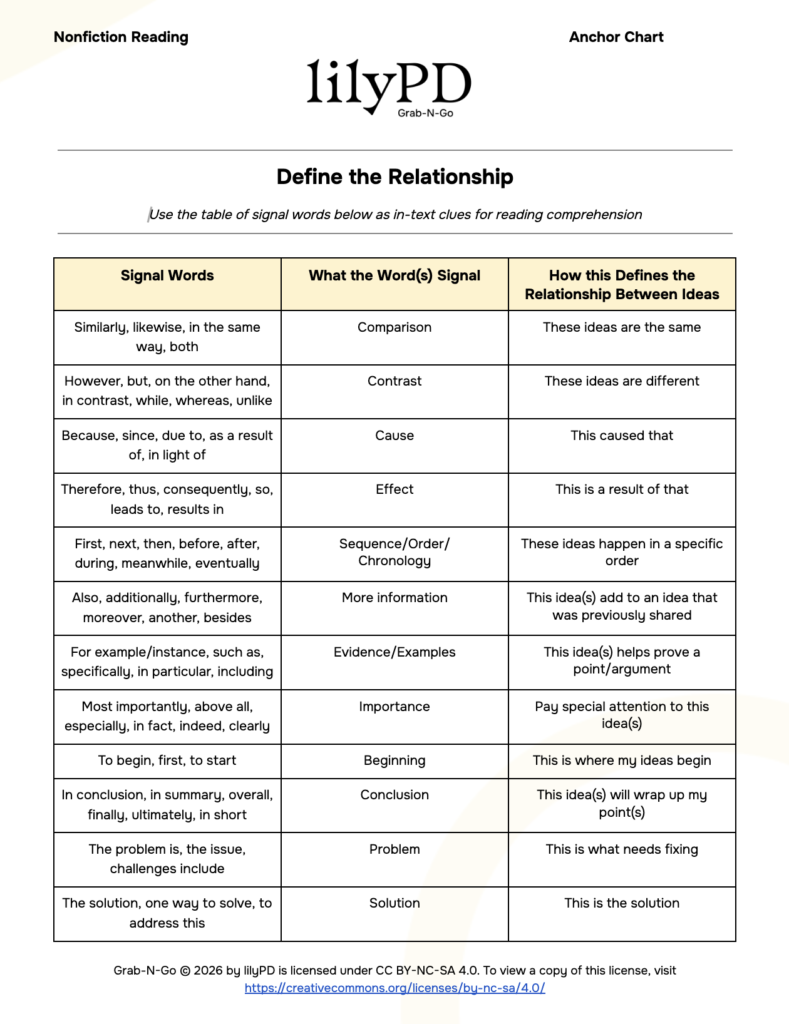
Literacy Strategy: Define the Relationship
Course:
Nonfiction Reading Strategies
Teaching Guide
6-12
Types & Purposes of Nonfiction in Social Studies
Course:
Nonfiction Reading Strategies
Anchor Chart
6-12
Literacy Strategy: Use Text Structure Clues
Course:
Nonfiction Reading Strategies
Teaching Guide
6-12
Literacy Strategy:Use Text Structure Clues
Course:
Nonfiction Reading Strategies
Student Activity
6-12
RQI: Facilitating the Question Formulation Technique
Course:
Historical Inquiry in the Classroom
Teaching Guide
6-12
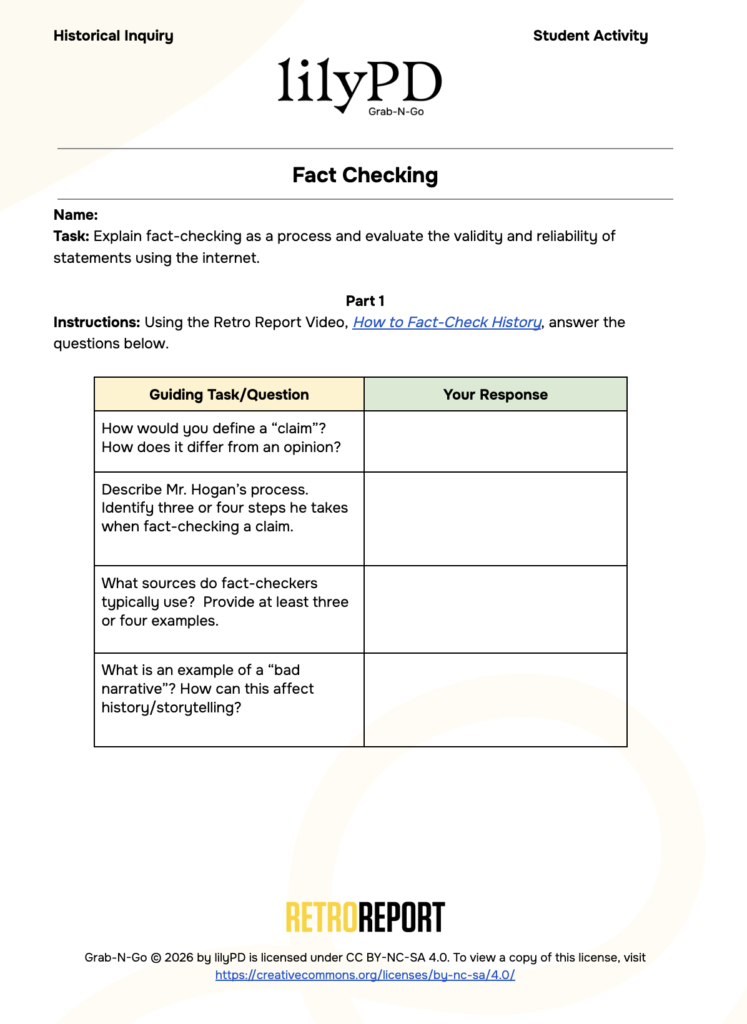
Media Literacy Strategy: Fact Checking
Course:
Historical Inquiry in the Classroom
Student Activity
6-12
Media Literacy Strategy: Reverse Image Search
Course:
Historical Inquiry in the Classroom
Student Activity
6-12
Researching with Purpose-Driven Inquiry
Course:
Historical Inquiry in the Classroom
Student Activity
6-12
Mini DBQ Inquiry Graphic Organizer
Course:
Historical Inquiry in the Classroom
Student Activity
6-12
History’s Habits of Mind Course Alignment
Course:
Historical Inquiry in the Classroom
Teacher Activity
6-12
Artifact Analysis
Explore dynamic ways to support artifact analysis in your social studies classroom.
In partnership with
William & Mary
New
6-12
5
5hrs

Podcasting for Educators
Learn how to use professional podcasts as powerful classroom texts and support students as they create podcasts.
In partnership with
William & Mary
K-12
5
5hrs

Historical Inquiry in the Classroom
Made for any social studies teacher who wants to elevate their inquiry instruction and empower students to think like historians.
In partnership with
William & Mary
6-12
5
5hrs

Nonfiction Reading Strategies
Learn how to teach students to read strategically in any subject area, so they can navigate nonfiction texts with purpose, confidence, and clarity.
In partnership with
William & Mary
6-12
5
5hrs

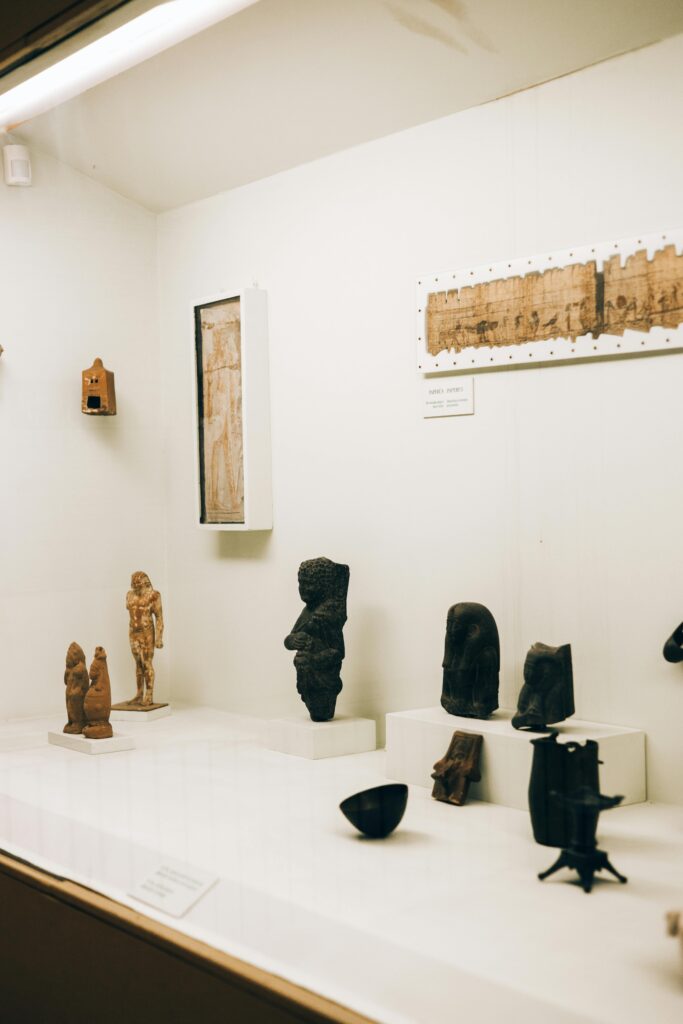
Stop Rushing Past Artifacts: Why Slowing Down Changes Everything
Engaging with artifacts in the classroom can be used as a tool to move from surface‑level observations to deeper questions and reasoned interpretations, and it can be fun too!

Written By
Allison O’Connor
at
William & Mary
K-12
Artifact Analysis
Artifacts
Literacy
Primary Source
Reading
Strategy

Explore Word Gaps for an Instant Reading Comprehension Boost
A “word gap” is a word or phrase that a student doesn’t know (Beers and Probst, 2015). A word gap might represent a brand new word the student has never seen before or a word they can understand from context but can’t define. The Collect and Explore Word Gaps strategy asks students to bring together the word gaps they find in a text and then explore them. This strategy is about more than simply learning new language, though. Collecting and exploring not only these individual words but the patterns they form can also help readers understand the big ideas of a text.

Written By
Rebekah O’Dell
at
William & Mary
K-12
Literacy
Reading
Strategy
Vocabulary
Word Study
Teachers & Instructors
Sort by

Conor Molloy
3 Contributions

Sam Futrell
18 Contributions
Allison O’Connor
2 Contributions
Rebekah O’Dell
26 Contributions